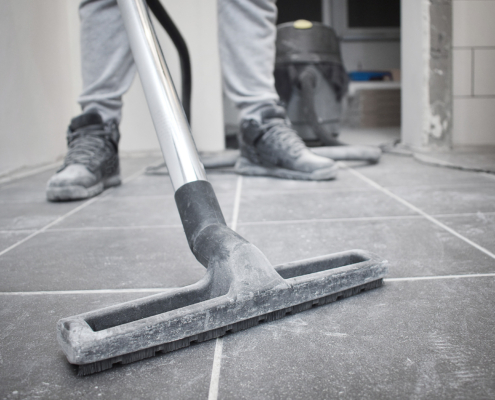
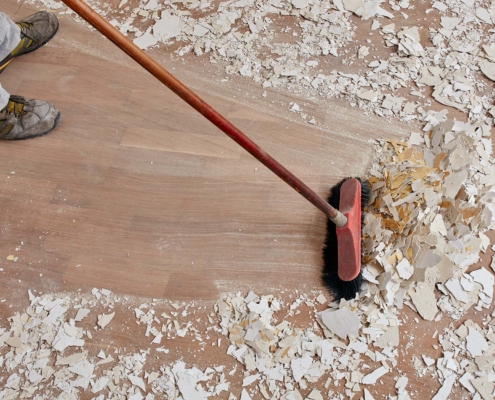
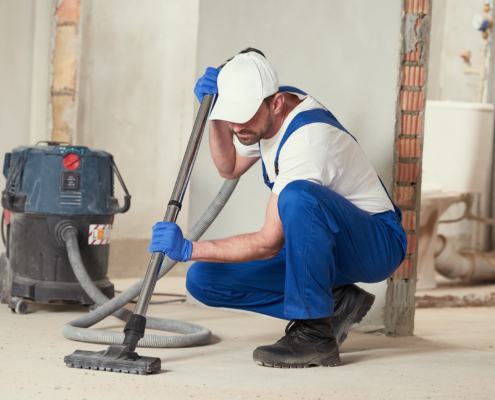
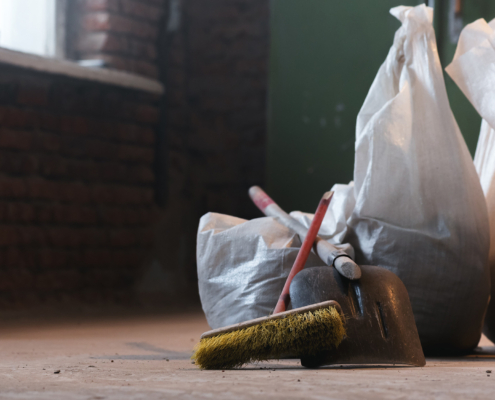
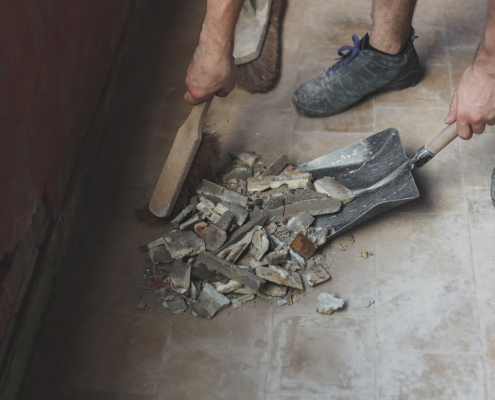
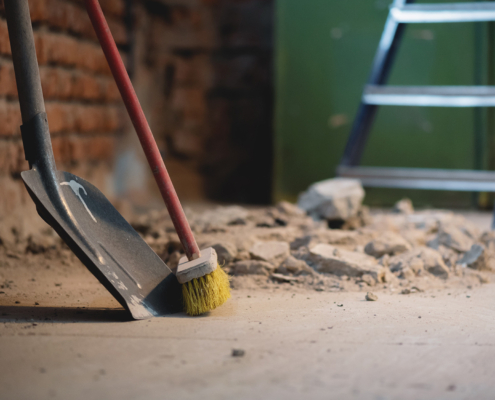
When jobsites aren’t cleaned regularly or correctly, hazards escalate quickly. Workers rely on clear, well-defined paths to move materials, transport tools, and operate machinery safely. Cluttered walkways, uneven debris piles, or dust-covered surfaces disrupt that flow and increase the likelihood of injury. Without proper construction site cleaning, even routine tasks can become risky, especially during busy phases of construction when multiple crews are working simultaneously.
Key risk factors include:
- Trip hazards caused by loose debris, discarded materials, or packaging
- Slip hazards from dust layers or wet materials left unattended
- Respiratory issues triggered by fine airborne particles
- Obstructed visibility when dirt accumulates on glass or lighting fixtures
- Equipment malfunctions caused by dust buildup on sensitive components
Each of these hazards contributes to preventable accidents and slows the pace of work. When tools can’t be found, aisles are blocked, or workers must navigate around debris, productivity drops and frustration rises. Over time, these issues create a ripple effect that affects the entire construction timeline.
Proper cleaning is a safety measure that ensures workers can do their jobs efficiently and without unnecessary risk.